
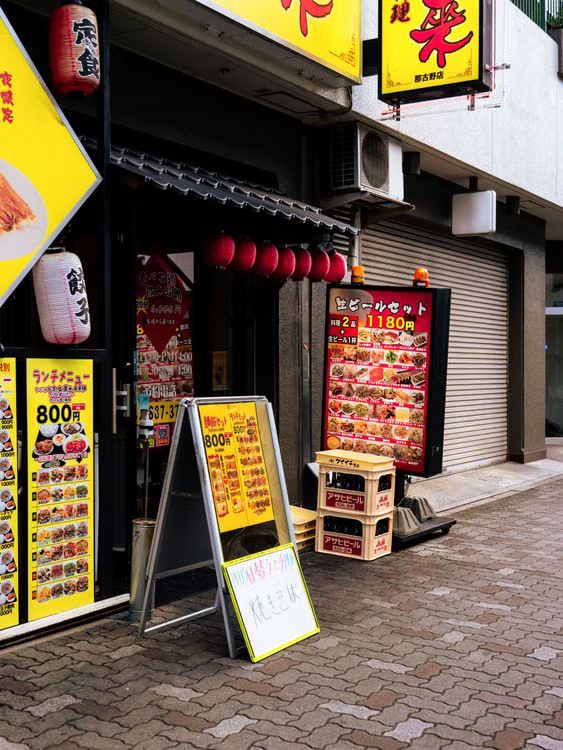
A textbook can teach you greetings, food vocabulary, and useful questions. Real life adds another layer. Signs may use abbreviated wording. Menus can mix Japanese and English. Greetings change with context.
Language includes tone, context, social expectations, and patterns that native speakers use naturally. At Journey Language Center, we use conversational and interactive instruction to connect classroom learning with real communication. Our Japanese program develops speaking, listening, reading, writing, vocabulary, and cultural awareness.
Signs Teach More Than Individual Words
Walk through a Japanese neighborhood, station, or store, and you will see language used differently from a vocabulary list. A sign may leave out words that a textbook teaches because the meaning is clear from context.
This teaches an important skill: reading for meaning instead of translating every word. Students can identify a sign's purpose and use surrounding information to understand it.
For learners taking Japanese language lessons, this context makes reading practice more practical. It also shows why Japanese cannot be reduced to memorizing isolated definitions.
Menus Reveal Everyday Vocabulary
Restaurant menus offer a useful window into natural Japanese. Food names, preparation methods, and ordering language introduce practical vocabulary.
Imagine preparing for a trip to Japan. Knowing food words helps, but understanding how they appear together on a menu is more useful. Role-playing an order builds practical listening and speaking skills.
Our Japanese classes use interactive exercises and conversational practice rather than relying only on memorization.
Greetings Depend on Context
Japanese greetings show why textbook phrases need context. The words you use can depend on the situation, relationship, and level of formality.
A learner might know a greeting but still wonder when to use it or how formally to say it.
At Journey Language Center, cultural insights are built into Japanese instruction. Our Japanese tutors help students explore etiquette and social customs alongside language skills. Our Japanese conversation classes provide opportunities to practice speaking in realistic situations.

Packaging Shows How Japanese Is Used
Japanese packaging can look intimidating. Labels often combine kanji, hiragana, katakana, numbers, symbols, and borrowed words. This variety provides useful reading practice.
Learners can identify familiar characters and repeated terms. Over time, they recognize patterns without translating everything. This is why Japanese language lessons become more valuable with authentic examples.
Why Real-World Practice Matters
Grammar and structured learning provide an essential foundation. The goal is to connect that foundation to communication.
Journey Language Center takes a conversational approach across its programs. We emphasize small classes, qualified instructors, customized curriculum, and individual attention. Japanese instruction is available at different levels, with group and private options.
As a language learning school, we want students to use what they learn, not simply remember it. For students in Denver, Japanese lessons can support travel, cultural exploration, and everyday conversations.
Make Japanese Part of Your Everyday Learning
Make textbook Japanese feel natural by noticing how language works around you. Read a sign. Study a menu. Listen to a greeting. Then bring those observations back to class.
If you want a practical way to study Japanese, explore Journey Language Center's immersive approach, learn more about why you should choose Journey, and register for classes when you are ready to begin.